⚠️ Content Warning
This post discusses suicide, self-harm, and mental health struggles. Please take care while reading. If this topic feels heavy for you, step away if needed.
Every time someone dies by suicide, the same line resurfaces: “Why didn’t they ask for help?” It’s said with shock, guilt, and grief — almost like it’s part of the funeral script. A phrase tossed out like a reflex, as if repeating it can explain away the pain. But the question itself is loaded — and often hypocritical. Because the truth is, people do ask. Sometimes with words, sometimes with tears, sometimes in ways so obvious it hurts. And yet, too often, they’re brushed off, told to toughen up, or ignored. Then, when it’s too late, the same people who dismissed them turn around and act shocked, as if the silence was the problem.
People do ask — in words, in actions, in every way
This isn’t about reading subtle “signs.” People literally ask for help. They say, “I’m not okay.” They say, “Can you talk to me?” They say, “I need help.” Sometimes they cry, withdraw, or even post publicly. And what happens? Too often they’re brushed off, laughed at, judged, told to “be strong,” “pray harder,” or “stop being dramatic.” Be strong.” “Pray harder.” “Stop being dramatic.” These are the echoes people hear when they gather the courage to ask for help. And then there’s the backhanded compliment: “You’re the strongest person I know.” It sounds supportive on the surface, but in the moment it feels like a stab — because what you’re really saying is, “You don’t get to be weak. You don’t get to fall apart. Not you.
In Jamaica, this isn’t theoretical. In 2024 alone, 67 people died by suicide — the highest number in 23 years. Men made up the overwhelming majority, with some studies showing over 90% of Jamaican suicides are male. Most deaths were by hanging. (Jamaica Observer, UWI Mona)
We’ve seen names in the headlines: Tyra Spaulding, a former Miss Universe Jamaica contestant, had openly documented her mental health struggles before her tragic death in 2025. On the Ministry of Health’s website, a 12-year-old girl named Imani Duncan shared her depression and suicidal thoughts. On U-Report Jamaica, Sihle wrote about struggling with depression and withdrawing from loved ones. These are not silent stories. They’re visible cries for help.
So when people turn around and ask, “Why didn’t they ask?” the hypocrisy burns. They did. With words. With actions. And with time we can’t give back.
Yes, people have their own problems — and that’s fair
Here’s where nuance matters: no one is saying people are villains for not being able to save everyone. We all have our own battles. Bills to pay. Children to raise. Anxiety and depression of our own. It’s true — no one can pour endlessly from an empty cup.
But let’s be real: that’s exactly why the “why didn’t they ask for help?” trope feels so hollow. Because deep down we know the truth: even if they did ask, we couldn’t (or wouldn’t) hold it. And instead of admitting that limitation, it’s easier to flip the blame back on the person who’s gone.
The Post-Death Performance of Grief
After the death, the same people who ignored these cries for help transform into grieving loved ones who “would have done anything” to help. Social media fills with posts about being there for others, about the importance of mental health awareness, about the tragedy of a life lost “too soon.” The irony is suffocating. This isn’t to say that all grief is performative, but there’s an undeniable pattern of people rewriting history to cast themselves as the supportive family member or friend they never actually were. It’s easier to live with “if only they had asked” than to confront “I was asked, and I failed to respond.”
The Systemic Failure of Support
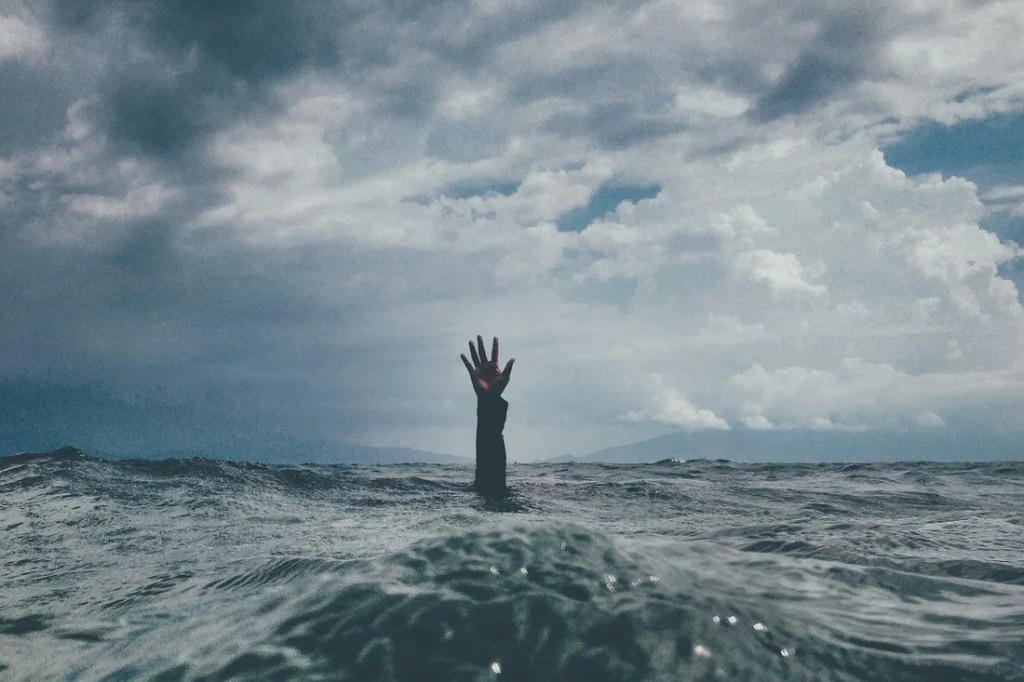
Our society has created a system where asking for help is seen as weakness, where mental health struggles are stigmatized, and where the burden of reaching out falls entirely on the person who is already drowning. We expect someone in the depths of depression, anxiety, or suicidal ideation to be articulate about their needs, persistent in the face of rejection, and grateful for whatever scraps of attention they receive.
Meanwhile, the same people who claim they “would have helped if asked” are often the ones who:
- Change the subject when someone mentions their struggles
- Offer unsolicited advice instead of listening
- Make the conversation about themselves (“I was depressed once too…”)
- Disappear when things get uncomfortable or inconvenient
- Judge the person for not “getting better” fast enough
Breaking the Cycle
The “why didn’t you ask for help?” refrain serves a purpose for those left behind—it absolves them of guilt and responsibility. It allows them to maintain their self-image as caring people while avoiding the painful truth that they may have contributed to the person’s isolation and despair.
Real change requires acknowledging that help was asked for, in all the ways it was offered, and that we as a society—as families, as friends, as communities—failed to provide it. It requires recognizing that supporting someone with mental health struggles isn’t a one-time conversation or a quick fix, but an ongoing commitment that can be messy, uncomfortable, and demanding.
It means learning to sit with someone’s pain without trying to fix it, listening without judgment, and showing up consistently even when it’s hard. It means checking in not just during Mental Health Awareness Month, but on random Tuesdays when someone might be struggling to get out of bed.
Most importantly, it means stopping the cycle of performative concern and starting the hard work of genuine support—before it’s too late to matter.
If someone asks for help, believe them the first time.
No second-guessing their pain. No telling them it’s not that bad. No “someone out there has it worse than you.” Believe them. Take them seriously.
Even if you can’t personally carry them, you can:
- Point them toward professional support.
- Offer what you can (sometimes just listening makes a difference).
- At the very least, avoid making them feel weak, dramatic, or inconvenient.
Because every ignored ask, every “not right now,” every dismissal — those moments accumulate. And when the final act comes, all the public grief in the world won’t undo the silence before it.
The bigger picture
Suicide is not just a Jamaican issue — it’s a global one. Over 700,000 people die by suicide worldwide each year (WHO). More than 50% of those who die by suicide visited a health professional within six months of their death (HelpGuide). People are reaching out. The system, and sometimes their own loved ones, just don’t respond.
So yes, solve your own problems where you can. Build resilience. Find strength. That’s real. But when someone else does ask for help — whether with words, posts, or even in whispers — don’t pretend later that they didn’t.
The hypocrisy is exhausting. And dangerous.
We can’t bring back those we’ve lost, but we can honor their memory by actually becoming the people we claim we would have been if given the chance.
🧡 If You Need Help
If you are struggling or thinking about suicide, please reach out for help. You are not alone.
In Jamaica:
- Mental Health & Suicide Prevention Helpline: 888-NEW-LIFE (888-639-5433)
- Emergency: 119
International:
- United States: Dial 988 for the Suicide & Crisis Lifeline
- UK & Ireland: Samaritans at 116 123
- Canada: Dial or text 988
- Elsewhere: Find international hotlines at findahelpline.com, or search for crisis services in your country.
 A girl, probably.